










AWiki is an useful tool in the Web 2.0 environment. We can use it to collaborate with our colleagues to create knowledge online. Some days ago I read a post about Wiserwiki, a new project launched by Elsevier. This is not the only medical wiki that exists. Actually exists a long list of medical wikis. What is different with this wiki is the fact that the information created here for the medical community belongs to the publisher that owns the wiki. It means that if you want to use the information that exist in this wiki, you have to ask permission to the owner in order to do that. This fact is not new, it is how the industry of information has been working since the invention of copyright. When we write a medical article, we sent our work to a medical journal. They review it, and if they think that the article is good, they publish it. They copyright our work, they become the owners of our work. But do we have to copyright everything that we create? is this the only option that we have? The answer is no. We can make our work under a creative commons license. For long time we have depended on publishers to diffuse, distribute, collect, circulate and propagate the information we create. But nowadays do we need publishers to do these? The answer is no. What we need it is to learn how to use the web 2.0 in medicine.
We have to work really hard to spread this concepts, it is still not widely known for the health care community and sometimes you feel lonely in a digital world. Finally what you are going to do with your work will depend on each one of us. We can do what ever we want with our work. Some people will prefer to reserve the rights of their work, while others will share their work without restrictions. What could be the consequences of this changes in the mentality of the people? Can you understand the possibilities it has? Karina Descartin says : " I understand the possibilities better than ever: broader knowledge, wider accessibility for medical students and professionals, and more exchange of vital information among peers than ever before". What do you think?
Dec 2, 2007
Medicine 2.0 : Copyright or Creative Commons ?
1 comments
 Bookmark this post:


Aug 10, 2007
Web 2.0 : Learning Molecular Biology Online
0 comments
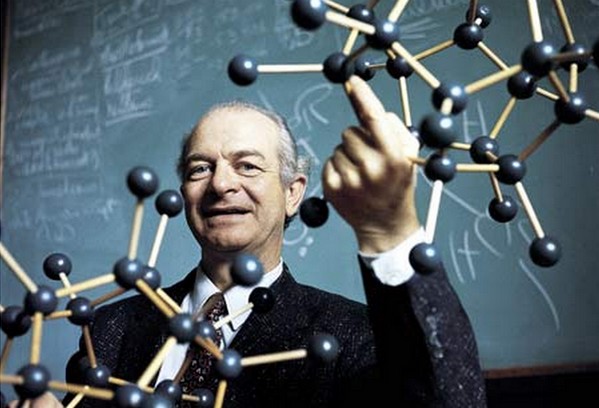
olecular Biology is for sure a really interesting subject. Here two links to amazing lectures from UC Berkeley and MIT. We can access them on internet for free. I recommend the lectures at the MIT. The lecturers not only know what they are talking about, but they show the passion they feel for this field. And sometimes this is really important to motivate students to learn. The photo above shows Linus Pauling holding models of water molecules in a classroom at the California Institute of Technology, Pasadena.
Molecular Biology Lectures Online
Name:Bio 1A General Biology Lecture
Source:UC Berkeley
Date: Spring 2007
Tip: To watch streaming video, to listen and to download MP3.
Name:Introduction to Biology
Source:MIT OPEN COURSE WARE
Date: FALL 2004
Tip: To watch streaming video click here.
Molecular Biology PowerPoint Presentation
Name:MBB 222-3 Molecular Biology and Biochemistry
Source:Simon Fraser University
Date: Fall 2003
Tip: To find PowerPoint presentation on internet with Google, type what you are looking in the search box followed by FILETYPE:PPT ( example: molecular biology filetype:ppt ).

 Bookmark this post:
May 4, 2007
Lawrence Lessig at Google
0 comments
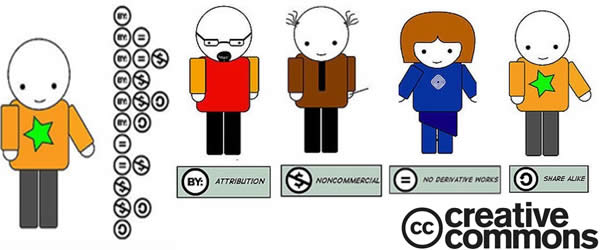
I think that to have a better idea of the changes the Web 2.0 is causing, we have to learn some principles like creative commons, collaboration, sharing, etc. By the moment, the only way you can learn those things is using the internet, because I do not see that a politic of education exists with respect to these topics, while a complete machinery to teach about copyright does. I am almost two years in the United States and I am taking classes at a Community College, and something they teach to you in each class is, "no plagiarism" . If you take an English class you will listen about copyright almost in any class, and all the books you use repeat the same thing. But nobody talks about principles like Creative Commons, collaboration, sharing, etc. That is the reason today I post this video "Authors@Google: Lawrence Lessig". He talks about copyrights, what we can do,what is allowed, who has the control, culture and Google. But mainly he explains what is RO (read only internet) and what is RW (read and write internet). He presents good examples of how, buy and consume control us, how merchants just allow us to buy their products, how do they create more market, more control about how to use, control and consume culture. For example, we buy any song we want on iTunes store, but only to play it on an Ipod. Therefore, now increasingly power to control us exists with copyright. Hence, what freedom do we have?
Fortunately, a read and write culture is born. Create, Share and Creativity have become important for business. Re-edit as you want, be free to do what you want. Nowadays, we can talk and realize about the Power of REMIX culture.
Recommended Links:
Are we a Free Culture?
Are We part of the Human Lobotomy?
What is Creative Commons?
 Bookmark this post:
Mar 15, 2007
What happened with Google Print Project
1 comments
I belong to the group of people who can not buy an original book, because they are too expensive, so I always try to find for good information in different ways, I always try to get full access to a book, and internet allow me that, in such a way that I think that information belong to those who find and use it. But to download book from internet is time consuming then it is an inconvenient to look in each of them to find what you want. And even when It is easier to download the book from many different servers than buy the book. It is more helpful to have a search engine to look in many different books at a time, is it possible to do that? the answer is yes, and that is what Google print project look for until is was stopped. The information for all is still a dream, even when most of the books are not under copyright law, why don't we use this information, we don't have access to these information, why when the technology to do that exist we do not use it, maybe because we don't know we can do that, so they take advantage of our lack of knowledge and do not release the information to anyone who wants to use it. Many people download books, scan books and post them online, there are many examples with more than four thousands medical books online. do you have to ask for permission each time you use a work, NO, the fair use of a copyright work is not and infringement. people have the right to profit with other work without permission, can I share my work, do I need to ask permission from the author to share something I bought, learn about what are our rights, what I can do in internet, what I can do with my computer, what I can see.
 Bookmark this post:
Mar 12, 2007
What is Creative Commons?
0 comments
Do you know what are your rights? Do you know what can you do on internet? Do you know what can you do with your computer? What is legal or illegal? Times are changing and the way things can be done are changing too, and there are people with huge interests who want to control what you do on internet, legal battles that are going to determine who will control the information you can access, people who wants to determine what can you do or what you can not do with with computer, there are things that maybe you are not aware of, but that you have to know. Because information and knowledge is power, those who control both of them will rule the world, but fortunately there is people who is fighting for our rights, for our freedom to do whatever we want to do. I just want to share this concept of creative commons with this to short videos, one in English the other in Spanish, and will like you to spread the message. Share, reuse, and remix — legally.
 Bookmark this post:


